
PROJECT: 1 SCM Documents to Digitalization and Dashboard
Business Objective:
Raw materials need to be procured from supplier and to be processed into finished goods. The finished goods should be handed over to direct sales department / customer.
Scope:
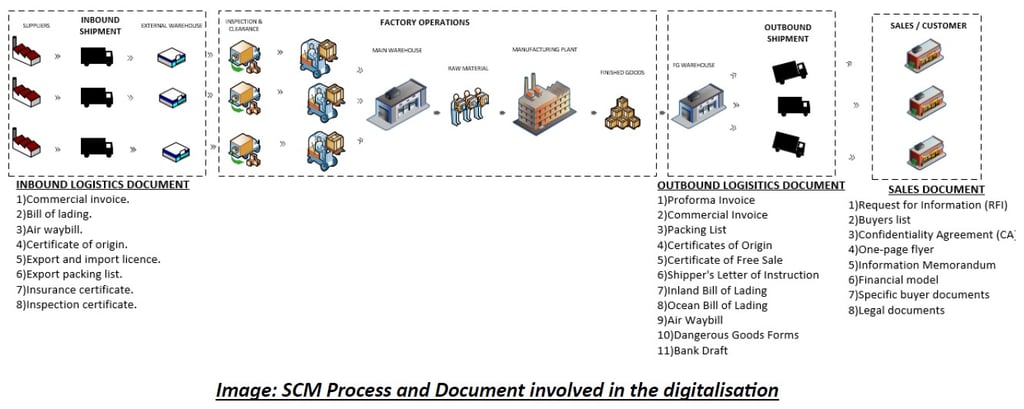
In business we have a lists of documents (the documents list mentioned in below image for reference) involved in the process of Inbound logistics , Outbound logistics and sales. Manual recording and maintaining the documents seems to be a hectic process and reported several manual errors affecting the business operations. So, automation of the manual process will avoid manual errors and ensure smooth business flow.
Analysis tools used: Gap Analysis, Cost – benefit analysis, SWOT analysis.
Tools used for development: Jira, Confluence, RPA – UI Path, Alteryx & Power BI
Methodology & Framework: Agile, Scrum.
Timeline : 4 months
As Is Process / Existing system:
The existing process:
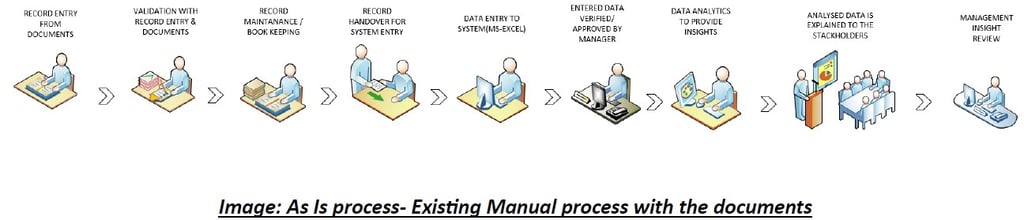
❖ Manually Entry of the data from the various records to the register.
❖ The registered Manual entered records are updated to the system
❖ The updated information was randomly verified by the Manager and approved.
❖ The system entered data are utilised by the Data Analytics team to project the insights to the Management
Gap Analysis:
• Manual Entry error happens often during entry in registers.
• Typo error which in turn misleads the logistics document availability.
• Verification is done only on random samples by Manager but not on all data, so the validation is not fool-proof.
• The Data Analytics insight might end up wrong since the data inputs are not 100% correct due to manual errors
To be Process / New System:
❖ The documents should to be scanned and uploaded to the specified location in the server
❖ Using Robotic Process Automation – UIPath, the scanned pdf documents will be read and gets converted to excel and the table data will be stored to server.
❖ The stored data in the server will be cleaned to a common format using Alteryx and it is further converted to dashboard using Power BI, based on ETL logics.
Benefits:
• Manual entry and errors are arrested.
• Short Duration
Limitations:
• The standard documents format should not be changed, if there is a change, system process also needs to be updated with the new format.
All the required documents need to be updated in the requested server to initiate the process, if not system will not initiate the process.
Out Of Scope:
Supplier document formats needs to be maintained by the management team. If there is any change in the suppliers document format, it should be intimated to the technical team for RPA system acceptance format change.



Current State
Future State
Documents involved in the process
Manual PO release-Single Supplier to Automated EDI releases to Multi-Supplier
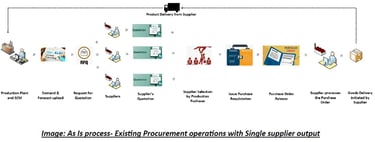
In the Supply Chain - Procurement process, for any material purchase, the single supplier are chosen based on the quotation from multiple suppliers in order to process each Purchase Order.
Scope:
The existing procurement process of selecting a single supplier, for each material based on manually analysing the quotation is not a proper match for the business. Since the final selected single supplier for a materaial, was also failed with his commitment in several cases and reflected loss in the business.
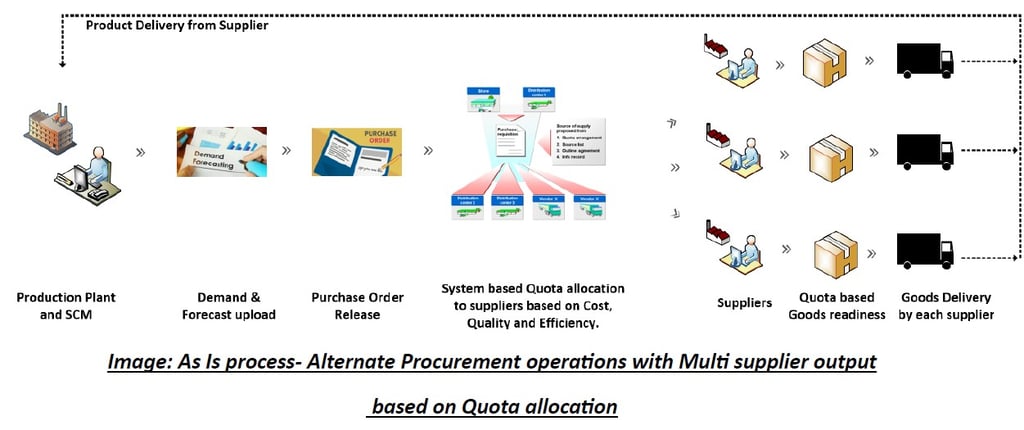
Instead of Manual purchase orders to single supplier for a material can proceed with multi -supplier for a single material and EDI (Electonic Data Interchange) releases instead of Manual Purchase orders based on Quota allocation will be a proper match for the business.
Current State
Future State
Analysis tools used: Gap Analysis, Cost – benefit analysis, SWOT analysis, Business Process Modelling.
Tools used for development: Jira, Confluence, QAD ERP, Alteryx.
Methodology: Hybrid (Agile & Waterfall)
Timeline : 6 months
As Is Process / Existing system:
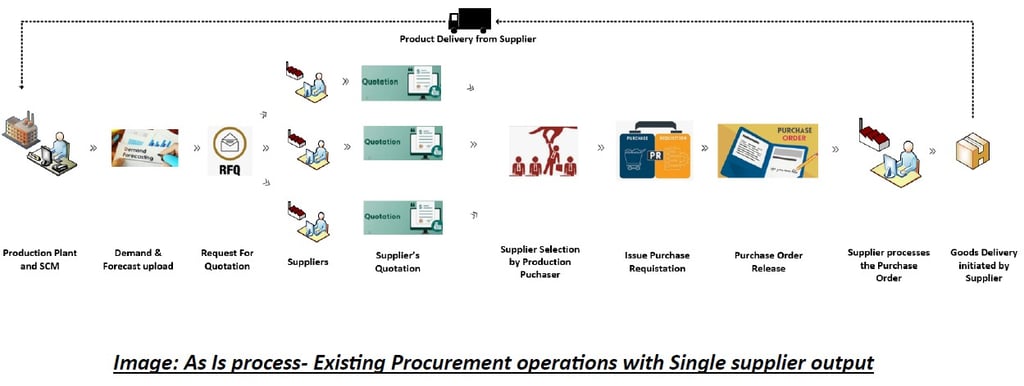
❖ Production Plant Purchase team uploads the demand forecast to the system.
❖ Based on Demand Forecast , the RFQ is generated and shared to different suppliers. Based on RFQ, each suppliers generates a quotation to the plant purchase team.
❖ Purchase team analysis the quote and selects the supplier for the part based on cost, quality and efficiency.
❖ Once the supplier is confirmed, the purchase request is created and converted to Purchase order.
❖ Based on the purchase order, the supplier ships the part.
Gap Analysis:
• There are numerous parts to be triggered with PO. Analysing each quotation is time consuming
• Supplier selection cannot be done efficiently with existing approach
• Excess Manual intervention in the process.
To be Process / New System:
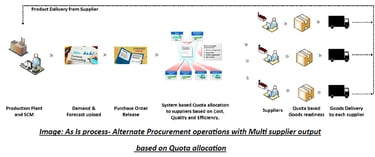
❖ Once the Demand & Forecast is uploaded by the production purchase, the Open Purchase orders are created.
❖ The system automatically triggers the quotation price for each material to the supplier and analysis the supplier with and updates the quota percentage for each supplier based on their price and previous data on quality rejections and supplier efficiency details.
❖ Each supplier listed in the system will receive the supply requirement quantity based on the quota allocated by the system.
❖ For each material will have multi-supplier delivering the part based on EDI supply requirement.
Benefits:
• Supplier selection, quota allocation will be completely managed and automated by the system. The system allocates equally to all the listed suppliers based on their cost, quality and efficiency.
• For the same part, we can have supply from different suppliers based on their quota allocation. Thereby the safe approach on part supply continuity
• Since the allocation quota is based on the cost, quality and efficiency of the supplier. If any issue is marked to the supplier will have reduction of quota for the particular supplier and the reduced quota will be matched with other suppliers quota increase.
Martech
Martech, or Marketing Technology, encompasses the integration of various software, tools, and platforms that marketers utilize to plan, execute, manage, and assess their campaigns and strategies. This approach not only automates tasks but also delivers data-driven insights that enhance customer engagement. It spans a wide range of functionalities, including customer relationship management (CRM), analytics, and advanced technologies like artificial intelligence for personalization and automation.

As Is/Current State
To be/Future State
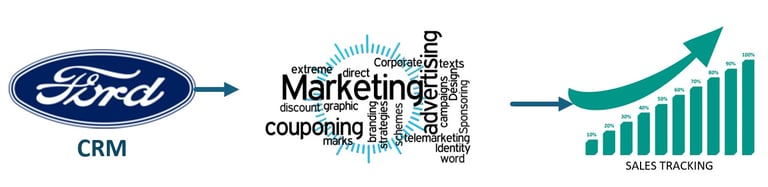
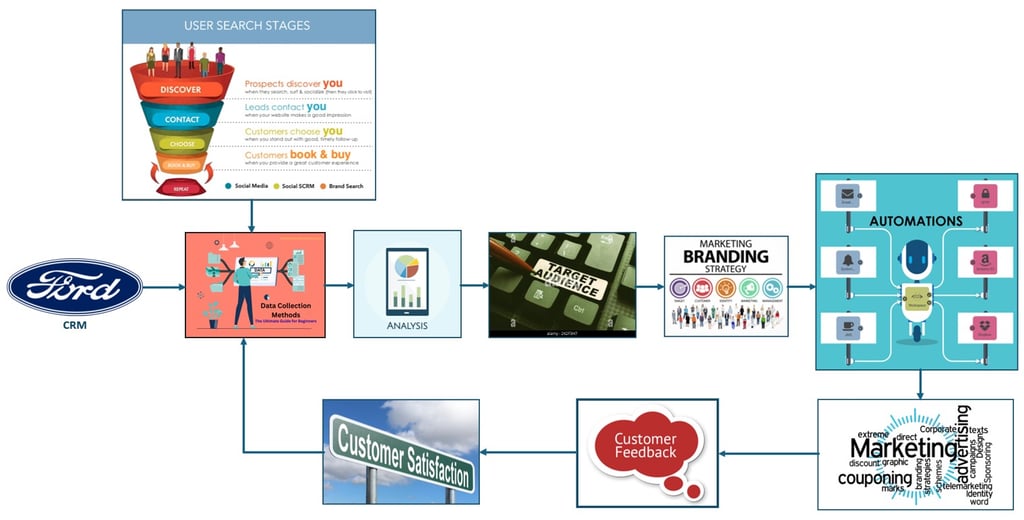
Ford uses CRM data to help with marketing and advertising. This data helps the company understand how well their ads are working and what customers like.
However, there is a problem because the sales targets are checked without connecting to how customers respond to the ads. This means that while Ford can see if they are meeting their sales goals, they might not fully understand how effective their marketing efforts are in reaching and engaging customers. This disconnect can make it harder for them to improve their strategies and connect better with their audience.
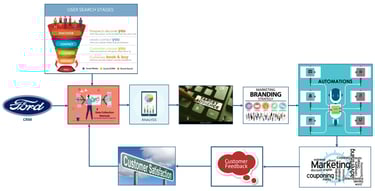
To bridge the gap between customer responses and marketing strategies, enhanced techniques were implemented. This involved gathering data from various sources, including CRM systems, online customer searches, cookie pools, and third-party data, which were then analyzed to identify target customers and tailor market strategies accordingly. The marketing processes have been automated to minimize human error, and this automation also encompasses tracking customer feedback and satisfaction, ensuring that insights are continuously fed back into the data collection process.
CRM (Customer Relationship Management): SAP CRM
Marketing Automation: HubSpot.
Analytics: Microsoft Power BI, Alteryx and Tableau.
Content: Hubspot CMS Hub
AdTech: was handled by 3rd party - Google advertisements.
SEO Tools: Google tools.
Tools used in this Martech
Dashboards
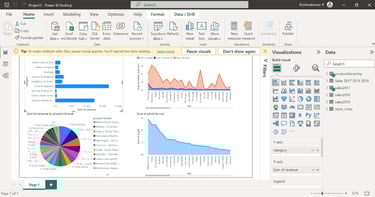
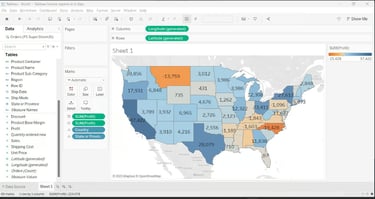
Dashboards were designed with Marketing campaign status, customer responses, customer satisfaction as chart and location wise
Contact
Phone
krishhh1991@gmail.com
+61-455435496
© 2025. All rights reserved.
LOCATION
East Perth, WA-6004